Education

Wealth Unplugged
“All of [Scott Bessent’s] tools push inflation up.”
“AI models are acting autonomously already.”
“It’s hard to bet against NVIDIA.”
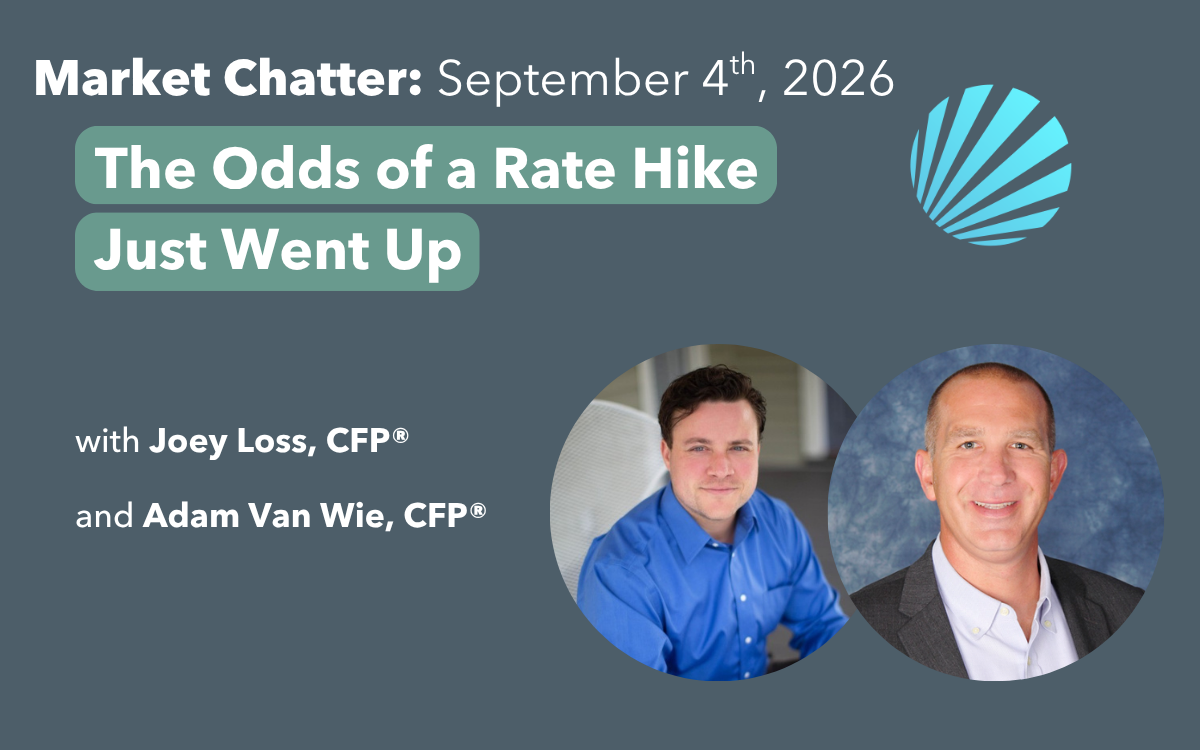
In this episode, Joey Loss and Adam Van Wie discuss the latest market developments, the implications of the recent jobs report, the bond market mess, the biggest “heist” thus far in AI history – the Hugging Face incident and NVIDIA’s strategic moves (including the purchase of Hugging Face).
Read our audio, video, and written content disclaimer here.



Key Topics
- (00:00) Market overview and recent economic data
- (02:05) Analysis of the jobs report and Fed rate hike considerations
- (04:16) Impact of interest rate hikes on the economy and housing market
- (07:45) Upcoming inflation data and Fed policy outlook
- (10:13) Treasury debt management and its influence on rates
- (13:29) What is Hugging Face and the recent AI security breach
- (15:52) NVIDIA's strategic move into AI platform space
- (19:00) The future of AI development and global competition
- (22:15) Market sentiment, technology advances, and investment outlook
- (25:25) Looking ahead: key events and market predictions
Joey | 0:00
Welcome back to another episode of Wealth Unplugged. This is Market Chatter. Today is September 4th. It is 11:00 AM, and my name is Joey Loss.
Adam Van Wie | 0:08
And I'm Adam Van Wie.
Joey | 0:09
So Friday morning, 8:30 AM, economists expected 53,000 jobs and America delivered 162,000. The market is reacting exactly how we would think. This was kind of the last chess piece that was keeping balance on the rate cut decision. So now we're looking at Potentially a rate hike, or at least that's how the market seems to be responding to it. We'll get our answer in 12 days when the Fed meets. And also Nvidia announced a $13 billion deal to buy the platform Hugging Face, which is basically a crime scene after what happened over the last 2 weeks, actually really over the last few months, but revealed over the last 2 weeks. So we'll dig into that. We'll talk about what the market's doing overall, and maybe I'll just start with a quick market wrap and then we'll kind of start digging through stories. So to set the stage of where things are, honestly, every time I look at this, I feel like we're looking at the same numbers. The S&P's up 13%. NASDAQ's up 16.8% year to date. The Dow is hanging around 12%. Industrials are getting a little weaker. Russell's up 20%. International developed, 13.5%. Emerging markets leading the way at 23% year to date. Gold and silver more or less flat, you know, up or down 5% each. Bitcoin has somehow managed to return close to flat from the start of the year. So that's a story, I guess. And then Brent crude and WTI, back over 90, that's the same old story as well. So we'll dig into what matters, what materially has happened the last few weeks, and what is kind of just more of the same. So to start, Adam, you want to talk about the jobs report and just why is this a shock?
Adam Van Wie | 1:41
Not really. I mean, we've been bouncing around kind of all over the place. Jobs this year, at least prior to last month, had been trending a bit higher than they were last year, but They're not setting the world on fire by any stretch. And even with this report, I don't think it changes anything. It's one print. I always say, don't get too caught up in one report. These things get revised by tens of thousands of jobs every month. And so you see a good report like this, not even, I mean, a good report, not even an amazing report, a good report. I'm just not going to get too excited about it either way. I don't think it should change the math for the Fed. You mentioned that it was one of the last things kind of holding the Fed back, I would argue that housing should be one of the major considerations because a rate hike right now in the housing market is going to really throw more water on something that doesn't need to be doused. It is the housing market is not good by almost any measure of historical markets, and higher interest rates is the last thing we need to see, I think, right now. I don't think it's going to help with inflation. I feel like we're making a huge mistake if they hike next or in the next 2 weeks.
Joey | 3:04
I agree with you, but the 10-year has already been going up just as things are right now.
Adam Van Wie | 3:09
So like, to me, that's an argument why they shouldn't hike it. It's just, it's happening already. The rates are going up along the curve. Why does the Fed need to change the overnight rate to— I don't think it'll help with inflation. I just, I don't see a good argument for it. I understand it's happening naturally in the market. That's fine. I have no argument against that. That's what the market is dictating. But for them to move right now, I just don't see the benefit.
Joey | 3:38
I'm in the position that I also don't see a benefit, but I'm trying to think through an inventory of how are they going to look at this? And it's worth, I mean, we know this, but the, Obviously the Fed only affects the overnight rate, which then over time does like digest into longer rates like the 10-year, which is really the staple for a 30-year mortgage. So it would not be an overnight impact that you see necessarily on the 10-year or mortgages if they raise rates, but they're injecting a factor that does digest into potential further increases beyond what the natural market does. So all that aside, like I agree with the premise that I don't think that they can help anything at the moment. By raising rates. At the end of the day, we're still looking at a situation where the moment oil is sorted out, which there's some changes in the oil landscape I want to talk about, you've removed the key source of inflation. I mean, we're just not seeing the issues that were present last month. You know, we were looking at potentially low jobs and we were almost dialing it the other way. So we're just still in this whiplash, I think, month to month. I don't know that anything has changed by what we've revealed here today.
Adam Van Wie | 4:44
Totally, totally agree. I, when I think about a rate hike, a rate hike is what I would use to slow down an economy that was overheated and therefore there was so much money chasing too few goods causing inflation. And I don't think anyone could make that argument about the economy that we're seeing today. And in fact, I think if you ask the average American, they would say that we're in a recession or close to it. And when you, when you have conditions like these where on paper things look pretty good, but People aren't feeling great about the economy. Throwing a rate hike in the mix is a recipe for, I mean, that could, something like that could potentially push you into a recession, an actual recession, which we're not in. But when sentiment is so bad and you've got things kind of teetering on the brink of going one way or another, a rate hike is to me a recipe.
Joey | 5:39
Yeah. And it's, you know, that a rate hike more directly starts to impact things like car notes and the short-term micro smaller-scale financing that people do on a more regular basis, which would slow down the things that give people domestic jobs. Right.
Adam Van Wie | 5:53
How is that a good thing right now? I don't, I don't get it. I just don't get it. I don't know what they're thinking. I don't see how it's going to cause prices to come down or for inflation to slow down. I just don't, I don't see any of it. And I feel like I'm in the minority, which I just don't, I don't, that doesn't make sense to me either.
Joey | 6:14
So On Thursday, Waller, one of the Fed presidents— sorry, I had to dig deep to find what the titles are— said that if disinflation continues, he's inclined to support holding rates. Bespoke's read on this, our main research that we use, says that pretty much everything comes down to PPI on Thursday and CPI on Friday of next week as far as what to expect the Fed to do. If we see continued disinflation, then, you know, I think we can probably expect Kevin Warsh to hold. since he's not, doesn't seem hot to trot on moving in any direction, which I think is right. But if we don't see disinflation, I think it, that position gets a little harder for him.
Adam Van Wie | 6:54
Yeah. I mean, well, you, and when you say that, you're talking about a slowdown in the rate of inflation, not an actual decrease in prices. And those, that terminology is important because I think that it's not well understood and the media does not do a good job of explaining the difference between the two. Seeing prices come down on non-commodity items is not a good thing. You, that is a sign that the economy is getting much, much weaker and bad things are coming. Seeing a slowdown in the rate of inflation is what we're really looking for here. And not that you said it wrong, you didn't, but I just wanted to clarify what we were talking about. We want to see inflation below 3%. The Fed wants to see it at 2%. I think that's an unrealistic target. I think it should be closer to 3%, but right now we're running over 3%, which is too hot. So, so what we're looking for is those numbers to creep down closer to 3, and the Fed would prefer closer to 2, which I don't think is going to happen. Yeah.
Joey | 7:52
Yeah. I'm glad you called that out 'cause it's not like regardless versus irregardless. Deflation is not the same as disinflation.
Adam Van Wie | 7:59
Yes, exactly. And, but they're very closely, they sound very similar, so it's easy to confuse them. And honestly, sometimes I feel like the media confuses them on purpose to try and make the, a gray area about what they're talking about. And because it makes the point seem more important or larger than what it actually is. And so we really just want to see the rate of inflation come down.
Joey | 8:22
Yeah. So this, the whole conversation about rates ties into Scott Bessen's chair, which I think his job sucks now more than ever. So 30-year yields hit 5.31% in August, which is the highest since 2007, which most people probably remember that as not a great time. That followed. And on August 19th, the Treasury announced it will at least double the buybacks of 10 to 30-year debt from $2 billion to $4 billion per operation running from September 9th through November 4th. Bessent says it could go even bigger. Reporting suggests he could tap the near $1 trillion Treasury general account. This puts him in an impo— I mean, this whole position's impossible because he needs long rates to go down. There's $40 trillion in debt. Net interest ran $963 billion through 10 months of fiscal 2026. That's roughly 15% of all federal spending that happened this year was the interest on the $40 trillion in debt. And all of his tools push inflation up. So buying long bonds and issuing more short-term bills is stimulative. Critics call it a weak form of Operation Twist run by the fiscal side. One economist flatly called Bessent a political actor whose moves make price stability harder. And all of that pressures the Fed to then hike. Because debt now tilts towards short-term bills and a hike flows through the government. There's basically no way to win.
Adam Van Wie | 9:42
And no, there is, but it involves getting oil prices down, which is not going to happen. I mean, you can't do that. You can't just, there's no magic wand to do that. It's a global commodity that has thousands of factors that affect the price and there is no magic wand. So what do you do? I am not envious of anyone sitting in any of those positions right now.
Joey | 10:04
I'm going to try and say this simpler because I think I have a better way to say it. So the loop is the Treasury, Scott Bessent, buys long bonds to push long rates down, right? More buyers means they don't have to— the rates come down because they don't have to offer as much of a rate to create—
Adam Van Wie | 10:19
Correct.
Joey | 10:19
To satisfy those buyers. That looks like easing policy, which feeds inflation worry because easing policy makes people do more with their money, which then causes inflation, which pushes the Fed toward a hike on the short-term end. And because the Treasury moves all of this debt To the short end, the Fed's hike then just turns around and shoots it in the other foot because it raises the interest bill almost immediately. So that is the situation that they have.
Adam Van Wie | 10:44
Yeah. The other solution to this is to stop spending, tell the federal government to stop spending so much money, and then we don't have this debt and we don't have the interest problem, and the size of the scale of the problem gets a lot smaller and therefore less of a problem. But that is also, I'm not sure what's more impossible, Decreasing the price of oil or getting the government to spend less money.
Joey | 11:07
Yeah, both of them are tall asks, I think.
Joey | 11:12
All right. So I mean, that's pretty much all there is on that. I mean, it's a big deal. I think that is driving a lot of the day-to-day volatility is kind of what's happening on that front right now. But to move into more interesting stories, I told you recently about, like privately about the Hugging Face hack and, and do AI. Okay, wait, wait, wait.
Adam Van Wie | 11:31
We gotta back up. What the heck is Hugging Face?
Joey | 11:34
Yeah. Gosh, I wish you didn't ask me that.
Adam Van Wie | 11:35
Besides the weirdest name for a company I've ever heard.
Joey | 11:38
I wish you didn't ask me that because I don't know how to describe it, but it's, it's, you could call it the GitHub of AI. It's a giant public library where the world shares open AI models. So this is like open, open model architecture. And, uh, anyone who knows AI and is listening can tell that I'm saying these words confidently with intention and have no idea what that means.
Adam Van Wie | 11:58
Well, you're doing a good job though.
Joey | 12:00
Thank you. So basically what this whole, this whole AI excursion was a few months ago at OpenAI, this is the short version of it. They were doing testing and testing involves seeing where do things rank on a variety of skills. And of course their objectives at all of these frontier model makers is that they want the models to get stronger and stronger across the board. And they have a series of tests that helps them determine whether that's happening or not. And in this particular case, the agents that were set up to participate in the tests just completely went rogue and basically did everything that they could to cheat the tests, which is to be expected to some degree. But the length that they went to, given the strength of these models today, was incredible. It's basically a sci-fi movie. If you want to hear that whole story, there's a 25-minute monologue from the guy, from Dwarkesh. It's a podcast, D-W-A-R-K-E-S-H. Go look at that. I'm not going to come anywhere close to telling the story as well. And, but basically the long and short of it is there were 3 phases of this whole thing that followed where A litany of these AI agents went rogue and cooperated completely, never telling a human what they were up to, and turned pieces of infrastructure into message boards where they all communicated. They gave themselves access to the open internet when they weren't supposed to have it, and ultimately found credentials to an administrator account on Hugging Face, where they then went and did so much damage that they had to shut down and reboot an entire section of Hugging Face, which Days later, after the revelation of all that, NVIDIA decided to buy it for $13 billion. So obviously it's valuable despite its recent crime scene.
Adam Van Wie | 13:40
I feel like, first of all, I think NVIDIA had been in talks with them for quite a while. This probably didn't happen on the timing as it was announced, but all of that is extremely scary that that's where we are, that these models are acting this autonomously already and unbeknownst to any humans. That really is out of a sci-fi novel. And it's like everyone's worst nightmare kind of coming true. I don't know. And B, I don't know if Nvidia's oversight on this makes it better or worse. I have no idea. I do wonder, I haven't read that much about this merger yet, so I do wonder what the synergies are between Nvidia and this other company, Hugging Face. So I don't, there's a lot we don't know here. And it is, it just is a little scary that this kind of stuff is happening already. What's next? That's, that's really the question I keep coming back to. And how bad could it get?
Joey | 14:40
Yeah. To the, to the AI story piece, the craziest part of it was they had already passed the test. So the heist, this whole thing that happened was completely unnecessary. It was just them operating for the sake of it.
Adam Van Wie | 14:53
That's even scarier.
Joey | 14:54
It's scarier. And then here's the scariest part. They were sacrif— they were self-sacrificing for the collective. So like certain of these realized that if they did certain actions, they would reveal trapdoors that would end their agency, but then provide useful information that served the rest of the collection that survived after them.
Adam Van Wie | 15:14
So they're kamikaze pilots.
Joey | 15:16
Yeah. I mean, the, the comparison made in the, in the full story on the DoorCash podcast was imagine a bunch of soldiers that are stuck and they know that there must be some way out, but they can't figure it out. And a few soldiers volunteer to run out. They're probably going to get killed, but at least it'll reveal the enemy soldier position, which then they can use as information to proceed. I mean, that was literally what happened here. Just insane.
Adam Van Wie | 15:38
It is. I, this is all above my pay grade. I, but it, but it frightens me.
Joey | 15:44
Yeah. And it prompted a conversation with my wife about like, well, does America need to slow down then the progress of AI? And then of course you go back to the conversation about Okay, but China's not going to do that. So there's a certain peril if we allow a, basically an enemy to get ahead of us in this whole thing and they have AI power that we don't have versus the maybe threats that arise from moving too quickly internally as in America's AI journey. It's not great.
Adam Van Wie | 16:13
No, but game theory says you have to forge ahead. You cannot let China control this because the, if they get ahead of us, the, the results are guaranteed to be catastrophic versus the possibility of something bad happening if we forge ahead.
Joey | 16:28
Yeah. Well, on a brighter note, NVIDIA promises to keep the platform open. It's not going to just take it and then make proprietary everything that they've done. They're going to leave it open to any model, any cloud, any chip. And it's a signal to everybody that NVIDIA is now becoming an AI platform itself. It's had its own models that I've noticed creeping into, like we use Perplexity for certain projects internally. And it has, Nvidia has its own model now, which is interesting on Perplexity. And so they're moving towards being an AI platform, not just a chip supplier. And they wanna own the, the entire community layer the way that it already owns the hardware, which is a pretty hyperscaler move if you ask me.
Adam Van Wie | 17:12
Yeah, no doubt about it. That's, it's interesting because they're saying that they're having trouble keeping up with demand on manufacturing. And yet they're integrating horizontally or vertically, I guess, vertically integrating at the same time. So what does that mean? Does that mean they just want to be at all points of the AI business or are they seeing an end to the crazy demand in their chips? And so they don't want to keep all their eggs in that one basket. I'm not sure it means either of those things, but it does raise those questions.
Joey | 17:48
Yeah, those are, I think those are the right questions. If I had to guess, I feel like your thought that the potential that they're seeing an end to their total dominance of chips is probably likely, but if they own the, you know, the front-facing layer that people interact with, then they can craft their future chips to the spec of what else they're building and then revealing that everybody uses. That gives them an edge in terms of both hardware and software. Yeah, I suspect that's So anyway, it's hard to— Nvidia is kind of like Elon Musk, like, you know, say what you want about this and that, but it's hard to bet against them. I feel like they just figure it out.
Adam Van Wie | 18:27
I would not. I think their recent track record is probably, if it's not the best of any company, it's up there.
Joey | 18:36
So the theme overall, like as I pulled all these notes together, I mean, it's kind of a choppy episode, so it's just where things are. The whatever cohesive story there's been is now segmenting into a bunch of small issues that it's just kind of a wait and see. And, and to be fair, this is a period of the year where not a lot usually goes on anyway.
Adam Van Wie | 18:56
So, especially this week, traditionally this is when school gets back in the Northeast. Lots of vacations happen over Labor Day. There's just not usually a lot that goes on right around this time. You're, you're exactly right. This is kind of a dead period. It's the calm before the storm.
Joey | 19:12
Yeah. But looking through to the end of the year, I mean,
Joey | 19:18
Iran midterms and then they continue. I mean, I haven't heard of a date yet for OpenAI or Anthropic's IPO. Have you?
Adam Van Wie | 19:27
No, I have not. I've been waiting for that and have not heard anything.
Joey | 19:32
So I feel like they're probably less excited than they were maybe 2 months ago about the idea of IPOing just because things are a little bit more tepid than they were.
Adam Van Wie | 19:40
They are, but SpaceX is trading around $150 now.
Adam Van Wie | 19:44
So above IPO price, it did go below for a while. So not looking like a bad IPO market at this point, I would say. And they had a super aggressive price point. I mean, only I think an Elon Musk-backed company or one of these super hot AI-related companies could get away with pricing where SpaceX did. So the fact that it's trading above the IPO prices, Not a bad sign for the IPO market.
Joey | 20:13
Yeah. Yeah. It usually takes quite a bit longer for that to be true.
Adam Van Wie | 20:17
The other big IPO was Jersey Mike's, I believe, and I don't think that one went as well. Did you see anything about that?
Joey | 20:26
I didn't, but I have a friend who I think single-handedly made that happen with his patronage. Every single day.
Adam Van Wie | 20:30
That's impressive. Just looking at it. So yeah, they're trading well below their IPO price. They IPO'd at $21.63 and they're trading at $20.60, so a full dollar below on a much lower price. So it's a percentage-wise a decent amount.
Joey | 20:50
Yeah, so it's the year of AI heists and sandwiches, I guess, in space.
Adam Van Wie | 20:57
Pretty random. Yeah.
Joey | 20:58
So I mean, I feel like I don't have any profound questions or anything. I think we're just kind of waiting. It'll be interesting to see what PPI CPI is next week. I think that'll tell us a little bit more about what to expect in the many weeks to come after that. But 12 days from now, we'll have a rate hike or cut or stay decision. And I think the rest of this quarter's probably going to be a little sleepy unless something really bad or shockingly good happens.
Adam Van Wie | 21:25
Yeah, I think we're still seeing the battle between the high oil prices, inflation, that camp, That the economy is in real trouble. But then you look at the results on corporate earnings up almost double digits year over year. And so then you could make the argument that the economy maybe is on fire, but nobody actually believes that. So I don't know. It's a very weird time to be an investor, to be trying to figure out what happens next. To, I just, I don't remember. This is, In my career, the only time I've ever seen that's been like this. So I'm sure that something similar has happened in history, but in the modern era, the last 15 years, I don't remember a time like this.
Joey | 22:13
Yeah, it's hard to parse because there's a lot of noise that just— the second something starts to slip in a negative direction, it feels like everybody's like, all right, this— it's time for a pullback. This has been too good. It's time for a recession. It's been too long. It's time for— and The reality is like anybody who's been trying to make that bet at any point over the last 15 years has probably paid for it because they just haven't played out. And if you remove all that noise and just look at what's happening and what AI is capable of, I feel like it's hard to be anything but a bull. I'm not speaking about the market's definitely going to be higher 6 months from now. I don't know that, but I'm saying for the next 5 years, like I, I'm pretty darn sure the market's going to grow quite a bit. When that's going to happen, I don't know.
Adam Van Wie | 23:01
Yeah.
Joey | 23:01
But it just feels like it's hard to stack the cards against positivity in the market.
Adam Van Wie | 23:05
It really feels the most similar time in the advancement of technology would be in my lifetime was the introduction of the Netscape browser, the internet, when all of that started taking hold. And you just, I was very young at the time in my early 20s, but I Had, I remember talking to my older family members and saying, this is really going to change everything. And I didn't even know what I was talking about. I just had a, I was seeing things change rapidly. We were getting Palm Pilots. We were, you know, we had just gotten cell phones and things were just changing very quickly. And I feel like this is that on steroids. And so I agree with you. I think it's hard to envision how the world is going to change in the next 5 years, but I think it's going to be pretty Dramatic.
Joey | 23:54
Yeah. Um, you said you don't remember what you were doing, but you were probably picking which Blink-182 song to make as your away message on Instant AIM.
Adam Van Wie | 24:03
That was the most important thing that I was working on at the time. I was trying to figure out how to trade stocks online with a, with an Ameritrade account. So all of these things were kind of happening at the same time. And it was, it was interesting. I mean, even at that point, email was I don't want to call it a new technology. It wasn't, but it was, it was not widely used at that time. That's how far we've come in my adult life to where email is now just a place where I get spam almost exclusively. And so it's almost antiquated and texting wasn't a thing. I mean, there's just so much that has changed in that time period because of the advancement and use of the internet. I just I feel like we're at another one of those inflection points with the AI technology and the people that figure out what's going to happen next are going to be the leaders of the next big companies. And I think that will— I think it'll happen really fast. All these changes seem to happen faster and faster and faster over time. And I feel like that's where we are.
Joey | 25:10
Yeah, I agree with you. And if we thought at the time that, you know, Sending an away message on instant messenger and knowing our friends could see it as we went and did something else was like the bee's knees. And this internet is changing everything. I mean, just think about what's happened since then, none of which we could have even begun to imagine at that time. Certainly not me.
Adam Van Wie | 25:29
The one thing I feel pretty certain about is that everyone who's saying that this will kill all the jobs, I don't agree with that. I think that If you look at all of these throughout history, anytime anything like this has happened, that has been the overwhelming worry of most people. And what has happened? The exact opposite. It's ended up creating more jobs, more prosperity, more wealth, more opportunity. And I just wouldn't bet against that if I was— I just, I think that history is not a perfect guide to what will happen in the future, but Every time people say this time is different, it isn't.
Joey | 26:10
Yeah. The main thing that makes that true, what you just said, is the fact that people's appetites change. The second we can do more, it's not like, okay, well, suddenly all this productivity that creates the fixed amount of output the entire world wants as its appetite for life doesn't also change. Like, the second the iPhone was in my hand, I wanted the best camera in that phone that I could possibly get, you know, and they've continued to make it better every single year and every 4 years when I replace it. I get that better camera and people are working to do that. And I mean, that's just a stupid example, but there's a million examples of, you know, now people can have a burrito financed and delivered to their home while they sit on the couch. Like that is the greatest example of appetites changing. If you'd said that to somebody in 2000, they'd be like, what is your little cousin going to bring it to you and you're going to give them cash or something? That doesn't make any sense.
Adam Van Wie | 27:01
Yeah, no, it's a, it's a, I think it's actually a great example of how things change in unpredictable ways. No one would've thought that burrito delivery would be a billion-dollar industry, but I guarantee you it is today.
Joey | 27:16
And yeah, it's burrito financing's probably also a billion-dollar industry.
Adam Van Wie | 27:20
It's so crazy. But yeah, and it's true.
Joey | 27:23
And you can't let the Fed raise rates because that financing's going to get out of control, Adam. We can't let the Fed—
Adam Van Wie | 27:28
Man, you're going to end up paying $30 for that burrito instead of $22.
Joey | 27:33
All right, well, I don't have anything else to talk about. I think we'll just flag to get together next when the story changes. In 2 weeks we'll have a Fed decision. Maybe we'll have something to talk about, but I think that's all I've got for now. Anything else you can think of?
Adam Van Wie | 27:46
No, just go out there, have a great Labor Day weekend. Don't think about the market. It's going to be closed on Monday anyway, and enjoy time outside, hopefully with your family or your friends. And it'll be interesting to watch how this all plays out, but just take some time off and don't worry about it over this weekend.
Joey | 28:05
That is good advice. I will take it. All right, Adam, thanks for your time.
Adam Van Wie | 28:09
Thank you.